
As an Amazon Associate, Drillovia earns from qualifying purchases. Our recommendations are based on manufacturer-published specifications.
They look similar, they both drive screws, and combo kits sell them together — but drills and impact drivers work in fundamentally different ways. Understanding the difference saves stripped screws, sore wrists, and wasted money.
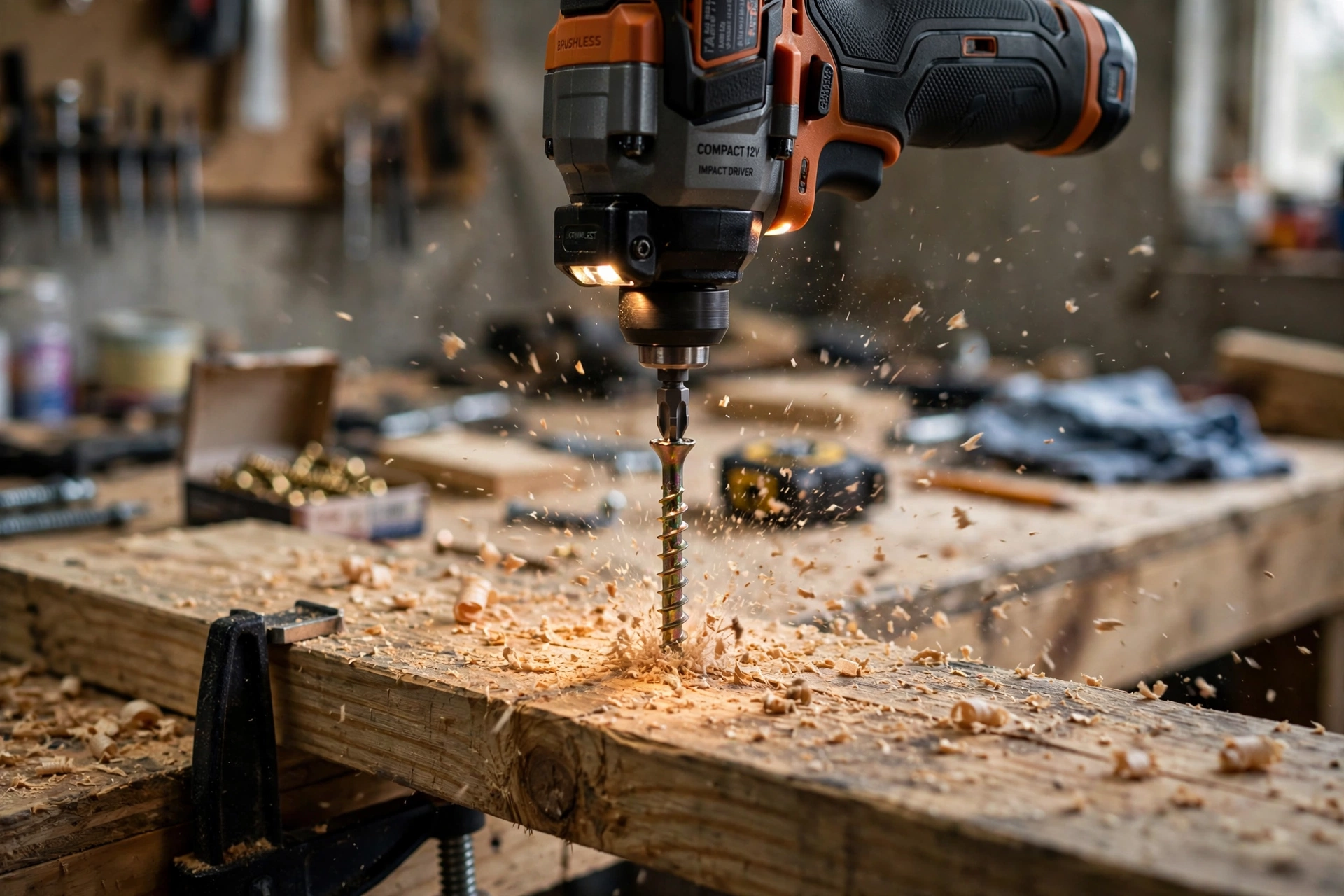
The Mechanical Difference
A drill driver applies pure rotational force. You pull the trigger, the chuck spins, and the motor’s torque transfers directly to the bit. An adjustable clutch lets you limit torque so you do not overdrive screws — that clicking sound is the clutch slipping at your set torque.
An impact driver adds a second motion: a spring-loaded hammer mechanism that delivers rapid rotational impacts — thousands of tiny hammer blows per minute — on top of the rotation. Instead of your wrist absorbing the reaction torque, the impact mechanism absorbs it. The result is far more driving force with far less twist transferred to your hand.
The chuck is the visible tell. Drills use a keyless chuck (typically 3/8-inch or 1/2-inch) that grips round-shank drill bits. Impact drivers use a 1/4-inch hex quick-release collet that accepts hex-shank bits with one hand — no tightening required.
Spec Comparison: Same Brand, Same Battery
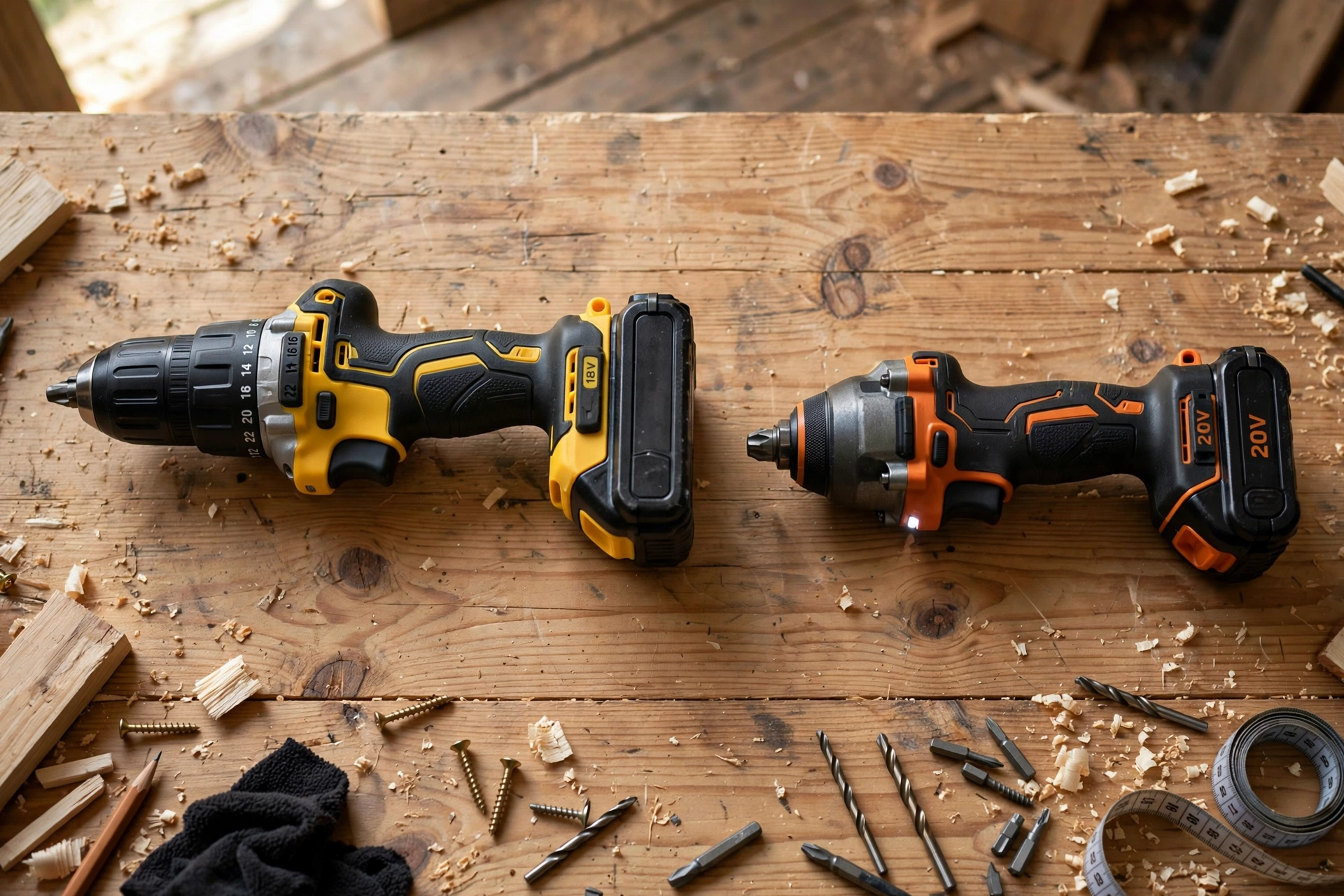
Comparing the DeWalt DCD791D2 drill/driver against the DeWalt DCF887 impact driver — both 20V MAX XR brushless tools — shows the trade-off clearly:
| DCD791D2 (Drill/Driver) | DCF887 (Impact Driver) | |
|---|---|---|
| Power rating | 460 UWO | 1,825 in-lbs max torque |
| No-load speed | 0–550 / 0–2,000 RPM | 0–1,000 / 0–2,800 / 0–3,250 RPM |
| Impacts | None | 0–3,600 IPM |
| Chuck | 1/2 in. metal ratcheting | 1/4 in. hex quick-release |
| Clutch settings | 15 + drill mode | 3-speed + Precision Drive |
| Length | 6.9 in. front to back | 5.3 in. front to back |
| Best for | Drilling holes, precise fastening | Driving long/heavy fasteners |
The impact driver’s 1,825 in-lbs dwarfs what any drill in this class produces — but that number comes with the impact mechanism doing the work, so it is not directly comparable to a drill’s torque rating. What matters is the outcome: the impact driver sinks a 3-inch deck screw without breaking a sweat or twisting your wrist, while the drill gives you the control to stop exactly flush.
When to Reach for the Drill
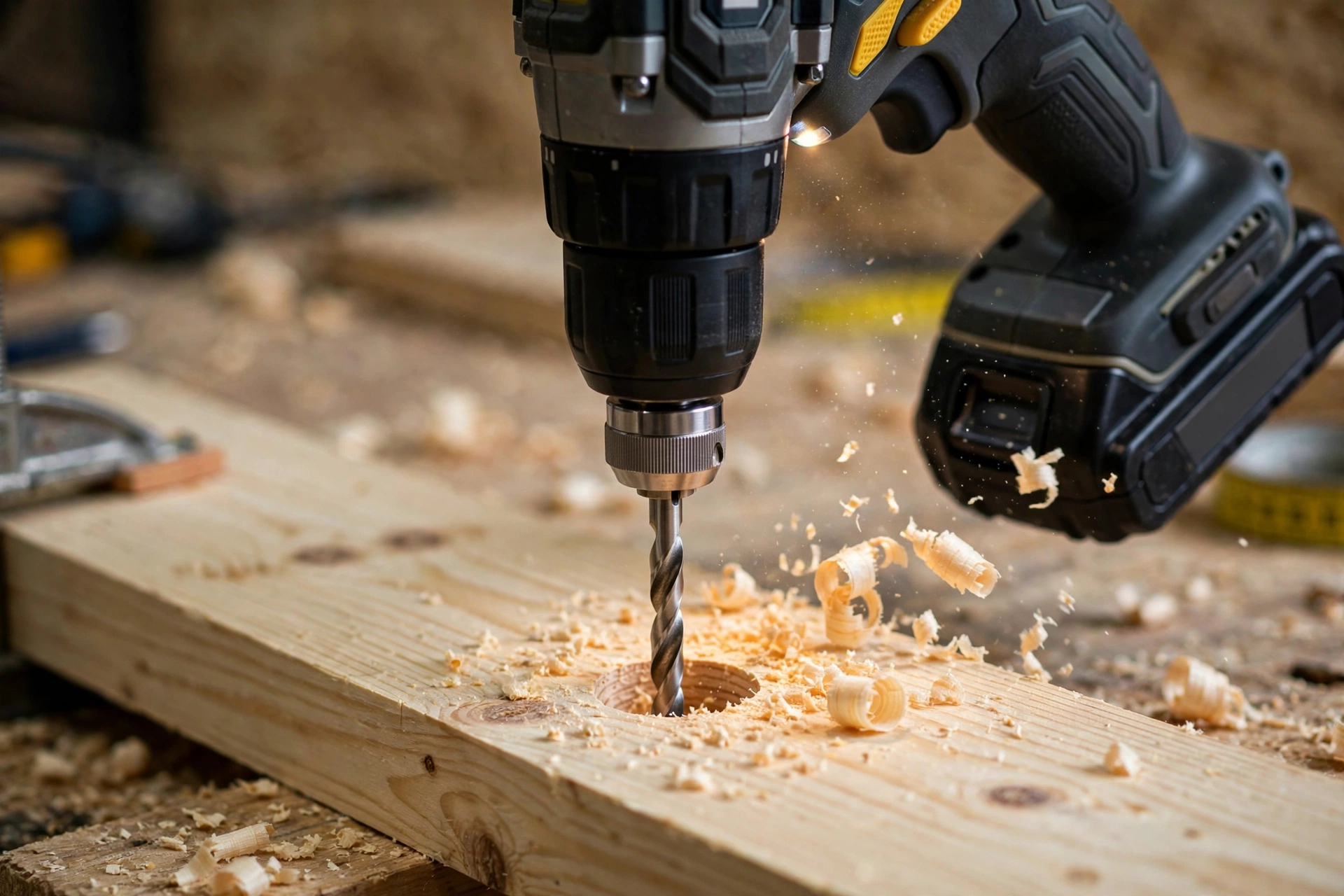
- Drilling holes of any kind. Only a drill holds round-shank twist bits, spade bits, hole saws, and Forstner bits. An impact driver cannot do this job at all (hex-shank drill bits exist but are a compromise).
- Delicate fastening. Hinge screws, outlet covers, cabinet hardware — the drill’s clutch gives repeatable, gentle torque. The impact driver’s hammering is overkill and risks damage.
- Small fasteners in soft material. Driving #6 screws into pine? The drill in low gear with the clutch set right is faster to set up and less likely to snap the screw.
- Drilling metal or masonry (with hammer mode). A hammer drill/driver’s axial hammering is a different mechanism from an impact driver’s rotational impacts — it is what you need for concrete.
When to Reach for the Impact Driver
- Long screws and lag bolts. Deck screws, structural screws, 1/4-inch lags — the impact driver’s element. It drives them fast without cam-out and without the wrist-twisting reaction torque.
- Repetitive fastening. Building a deck or fence means hundreds of screws. The impact driver is lighter, shorter, and your wrist will thank you by screw fifty.
- Stubborn or rusty fasteners. The impact action breaks corrosion free in a way steady torque cannot.
- Tight spaces. At 5.3 inches long, the DCF887 fits where the 6.9-inch drill does not.
Can One Tool Replace the Other?
Not really — they are complements, not substitutes. An impact driver cannot drill proper holes (no chuck for round-shank bits), and a drill cannot match an impact driver’s fastening speed and wrist-friendliness on long fasteners. That is why manufacturers sell them as combo kits: the DeWalt DCK283D2 pairs the DCD791 drill with the DCF887 impact driver on the same batteries for exactly this reason.
If you can only buy one tool first, buy the drill. It drills holes (which the impact driver cannot do) and drives screws adequately for most household jobs. Add the impact driver second, when you start a project with serious fastening volume.
The Noise Question
One honest warning: impact drivers are loud. The hammer mechanism produces a sharp machine-gun rattle at 3,600 impacts per minute that carries through walls. If you do early-morning or late-evening work in shared housing, your neighbors will notice. Drills are far quieter. This alone decides the tool for some buyers.
Bottom Line
Drill = holes + precise fastening + clutch control. Impact driver = fast, wrist-friendly driving of long and tough fasteners. Buy the drill first; add the impact driver when fastening volume justifies it. Most serious users end up owning both on the same battery platform — which is worth deciding before you buy either (see our 12V vs 20V platform guide).
New to bits? Our drill bit types explained guide covers which bit to chuck up for each job — and which ones actually fit an impact driver’s hex collet. You can also compare drill models in the Drillovia drill finder.